
Spoiler alert: This article contains spoilers for Harry Potter and The Cursed Child. I decided not to #KeepTheSecrets because the plot of this play has been out in the world for quite some time now. While I understand that the play is performed in and is accessible to only a select few cities around the world, the script was released world-wide and with a lot of hype exactly three years ago today. I assume that you, the reader, are either someone who cares deeply about the HP world and has since then read the script and formed your own opinion about it, or you’re someone who does not, in fact, eat, sleep and breathe the Wizarding World (which is, uh, fine) and hence won’t be too concerned with spoilers anyway.
Ever since July 31st 2016, I have been walking around in righteous indignation. This was the day the script of Harry Potter and The Cursed Child was released. You see, the Harry Potter series has always meant a lot to me (that’s a wee bit of understatement), and over the years I have joyfully welcomed each new offering with unbridled delight – each new book and movie has been eagerly awaited and duly squealed over in rapturous joy.
So I was just as excited when I first heard about The Cursed Child – the eighth story, finally! In addition to expanding the universe, this story was released when I was an adult living in NYC, and had the ability to line up outside bookstores at midnight with no judgment whatsoever. For all of the books that came before, I’ve lived in a small town in India where my parents were required to drive me to a bookstore miles away in the middle of the night for the book release (needless to say, we never did that). But in July 2016, I was finally adult enough to truly indulge in my childhood obsession, and I went to my first ever book release party and thoroughly enjoyed it. The HP love was at an all-time high.
However, my excitement plummeted rapidly in the two hours it took me to actually read the Cursed Child script. I wanted to like it, so badly, and yes, if I squinted really hard I could see glimpses of the warmth and fun of the original HP magic, the humor I loved. But that was vastly overpowered by a growing sense of dismay – the story didn’t seem real. It appeared to be a pale imitation of the original books. It just wasn’t what I expected of Rowling’s world, rich and detailed. I tried to make allowances for the fact that it was a script and not a descriptive novel, and hence did not have a lot of room for flowing and wonderful prose – but nothing, nothing could explain away the shoddy plot. It was out-of-character, sloppy writing (a time-turner plot, are you kidding me?!), and apart from the fanfiction trope of heavily relying on the source material, it was just lazy writing with hardly any new material. Instead of furthering the story, it was along the lines of – okay, we’re going to go back in time and mess with the story you know and love. And then mess it up again. And again. And then sort of messily fix it, ta-daa! The few elements that were new were also all kinds of ridiculous – Voldemort and Bellatrix having a kid, the trolley witch secretly being a crazy killer machine, Harry being a terrible father to his Slytherin son, and a half-Indian character named, of all things, Panju Weasley?
So…yes. Like I said, I have been considering The Cursed Child mediocre fanfiction, and have been very disappointed with Rowling (my Queen!) for trying to capitalize on her cash cow – it felt like she was using all the love we have for her creation, and sullying it. At this point, it felt like we the readers, the Potterheads, know the characters and the rules of the Wizarding World so much better than the author herself. I will still pay anything for HP, but please stay true to canon! Do you know how I, and millions of people have grown up reading and re-reading these books, poring over them like some form of sacred text or gospel? We have found comfort and solace in these characters. We have learnt about wars and racism and depression, and the incredible power of love. We have found heartbreak and euphoria, liquid luck and pure nerve and courage. We have lived all these lives and been all these characters, and Hogwarts is our collective safe space. And we are incredibly grateful for the gift of this fantastic world, but please, Rowling, let us all agree to leave its sanctity intact.
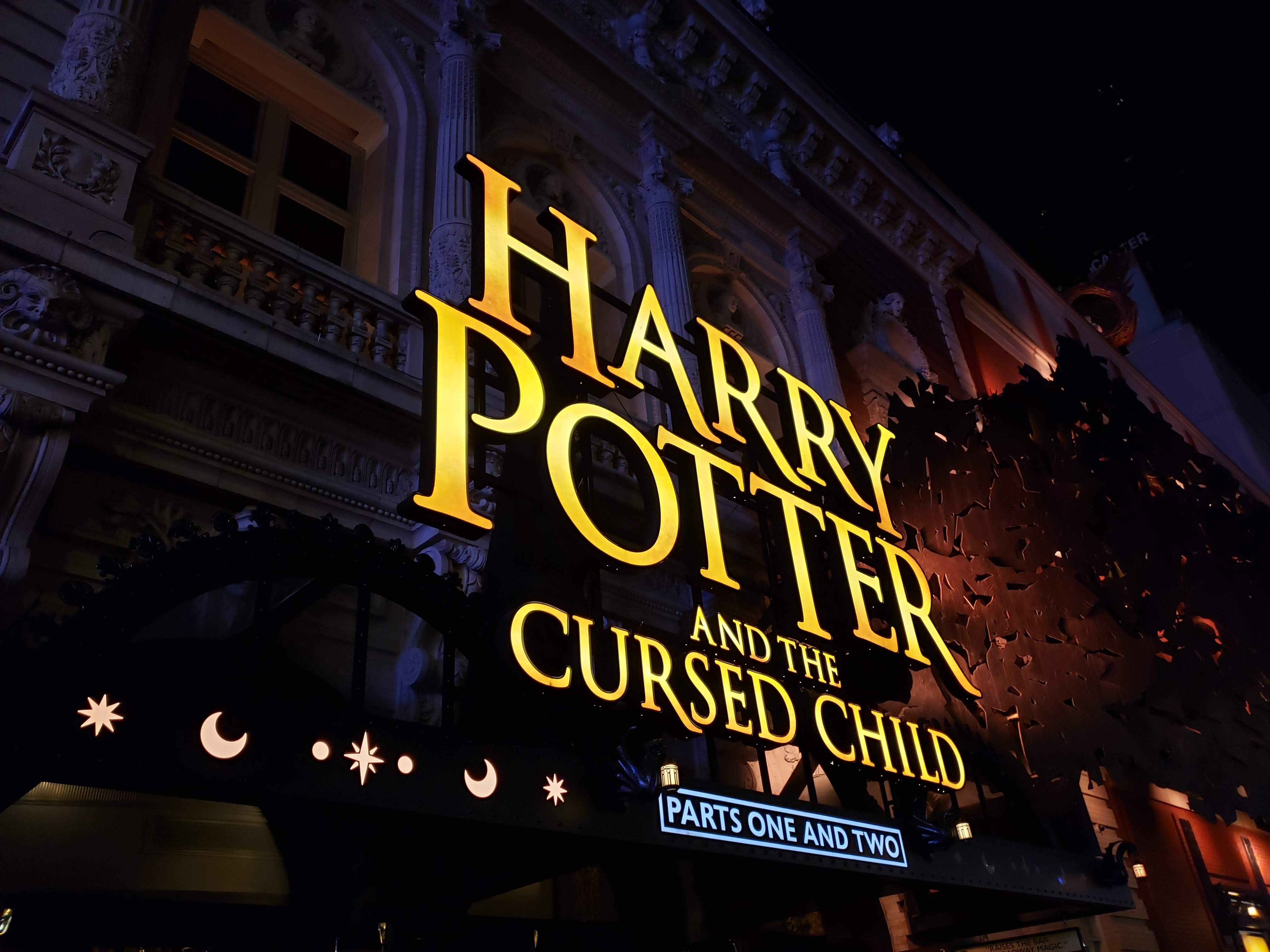
Anyway, this March a friend of mine won cheap lottery tickets to The Cursed Child show on Broadway, and asked if I’d like to go. I was pretty conflicted about it, and debated for a week or so until I decided that well, I love HP and I love Broadway, and this might be my last year in NYC – so while I’m here, I might as well grab the opportunity. Thus on the 7th and 8th of March, I walked into the Lyric Theatre on Broadway, because this is a two-part play, performed in roughly 2.5 hour slots each on two adjacent days. I walked in feeling tentative, skeptical, and trying not to get my hopes up. My walls of cynicism and defenses were firmly up. But as the queue moved towards the theatre entrance, with each step the walls slowly, infinitesimally started lowering. The entire audience was dressed up in robes and cloaks. They brandished wands and sported Deathly Hallows beanies. I could taste the excitement in the air. The line inched closer and closer, and I started catching glimpses of the Potter world.
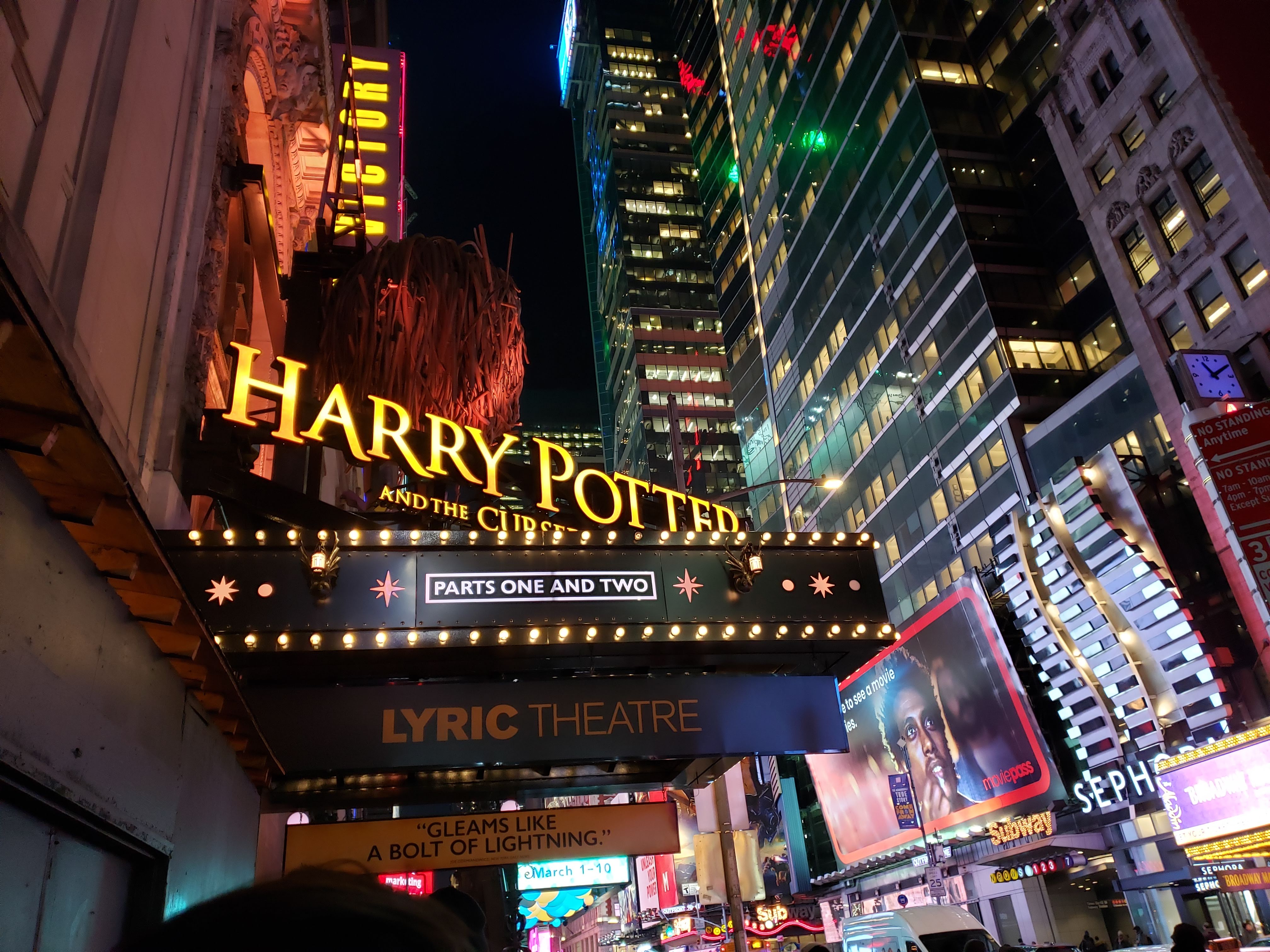
And the moment I stepped in – there it was. Rows and rows of merchandise, of course – but between the feeling of oh, they know that we Potterheads would shell out our Galleons for not just one, but two consecutive performances based on a flawed script – in the middle of that feeling started creeping the warmth of the Potter love.
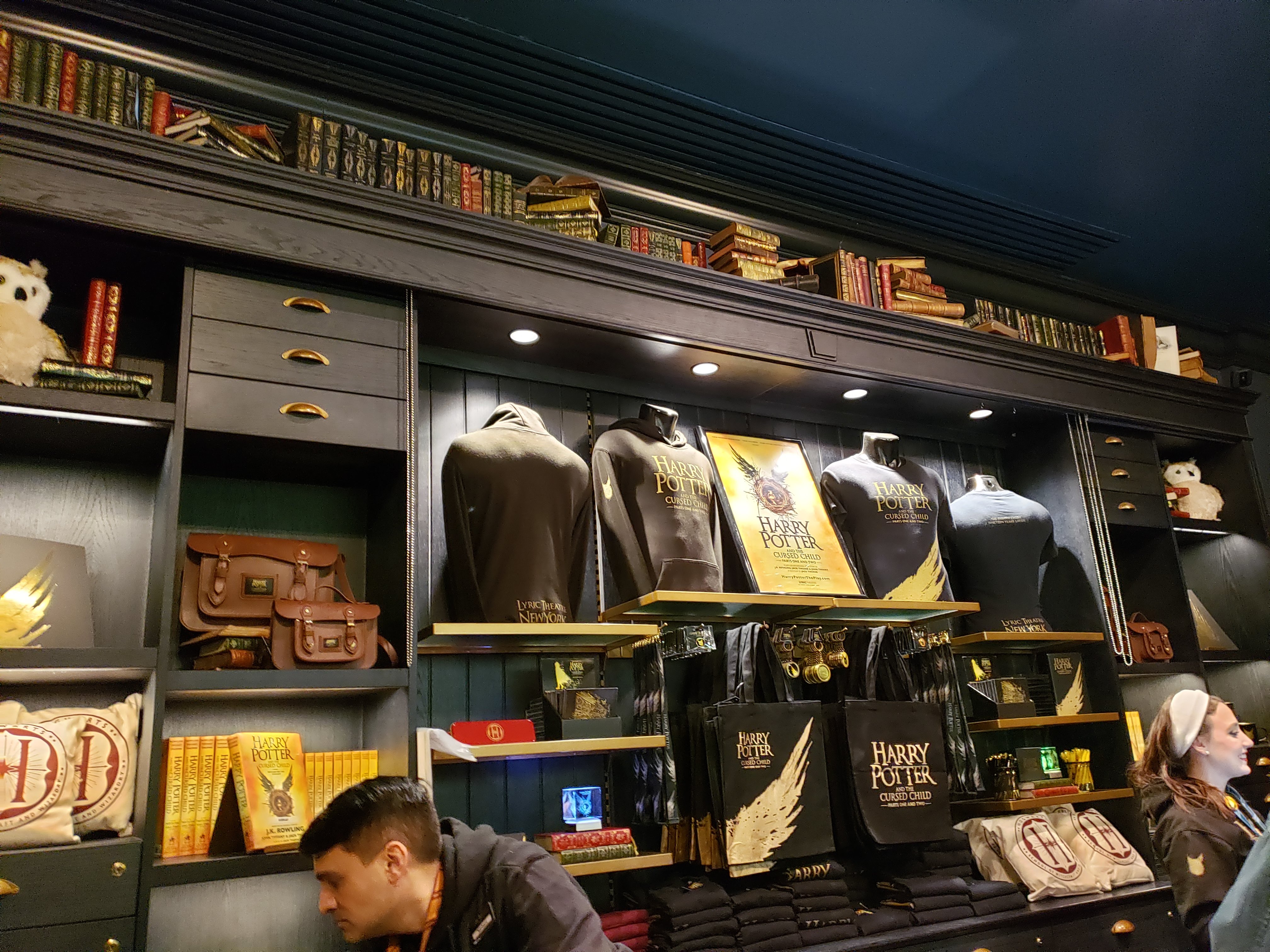
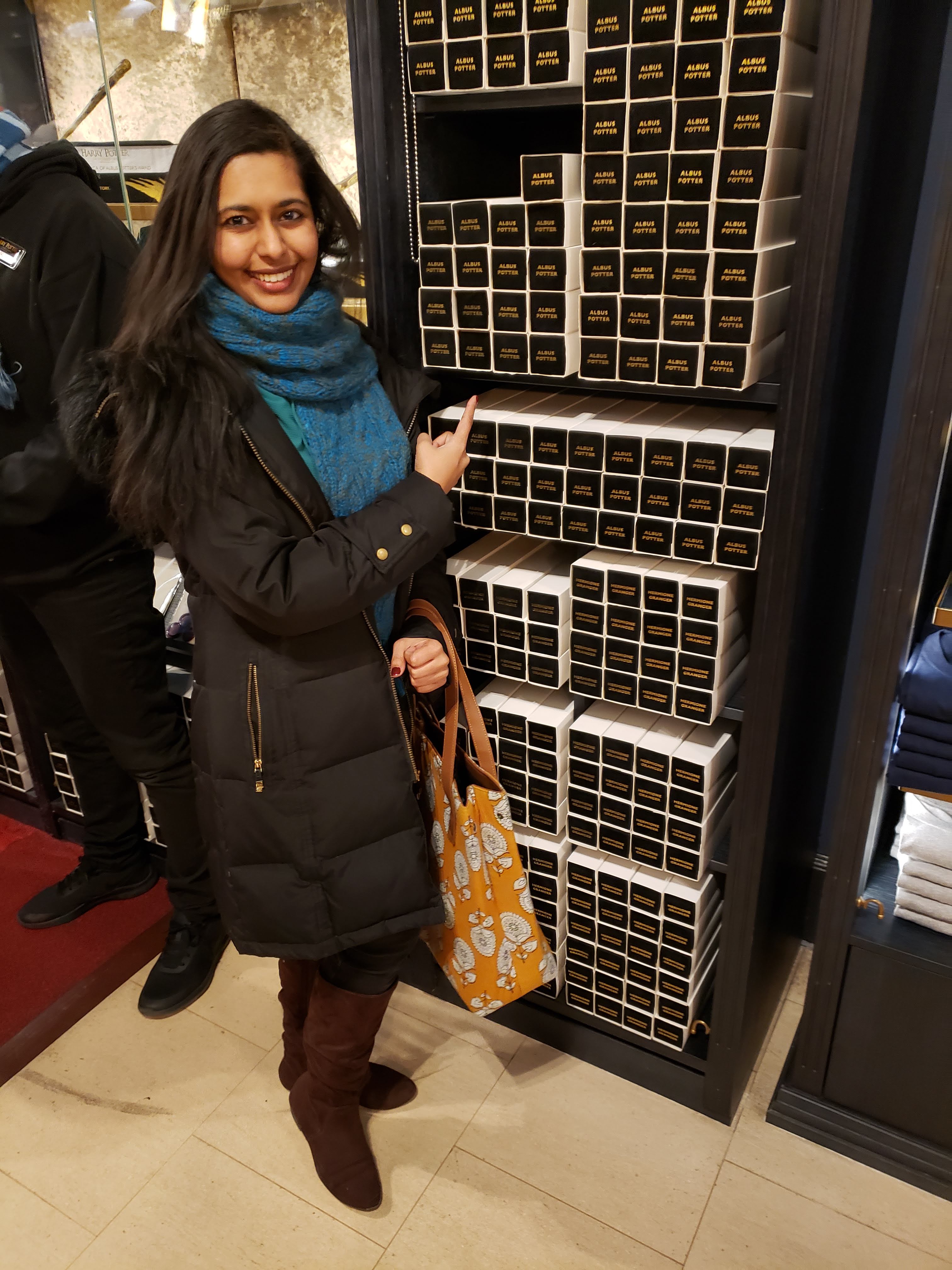
Instead of a coldly calculated money scheme, it started feeling like a warm indulgence, a welcoming arena, inviting me to revisit the Wizarding World yet again, invited in by fellow Potterheads who get it. Who share my passion. Who are as enamored by magic as I am – see, the Lyric Theatre isn’t just a neutral venue which happens to host the Harry Potter plays. Instead, the entire theatre has been transformed into a thing of magical wonder. Even before the show began, I was flooded with familiar love and nostalgia. The carpeted floor was an ode to Harry. The walls. The ceilings.
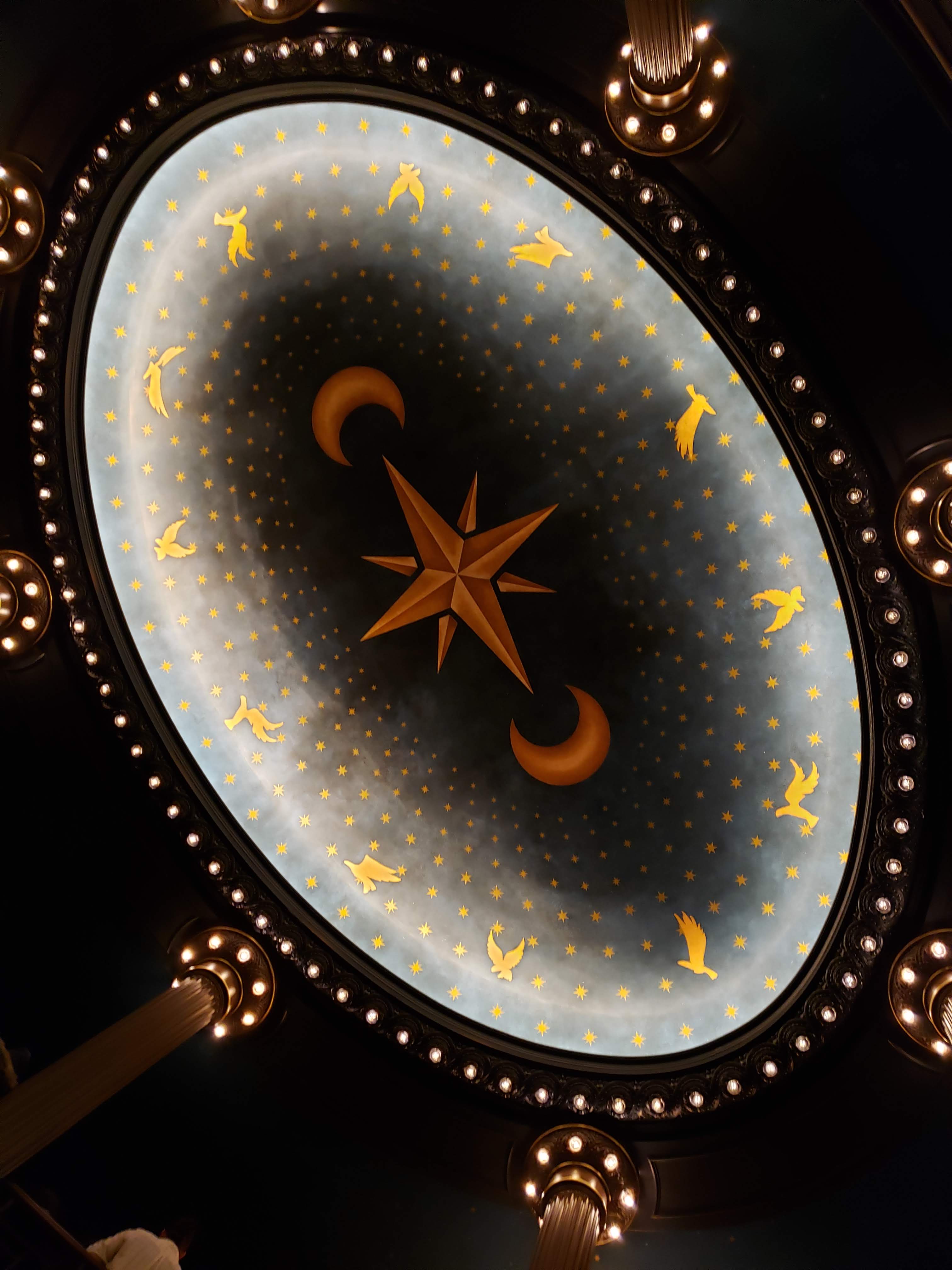
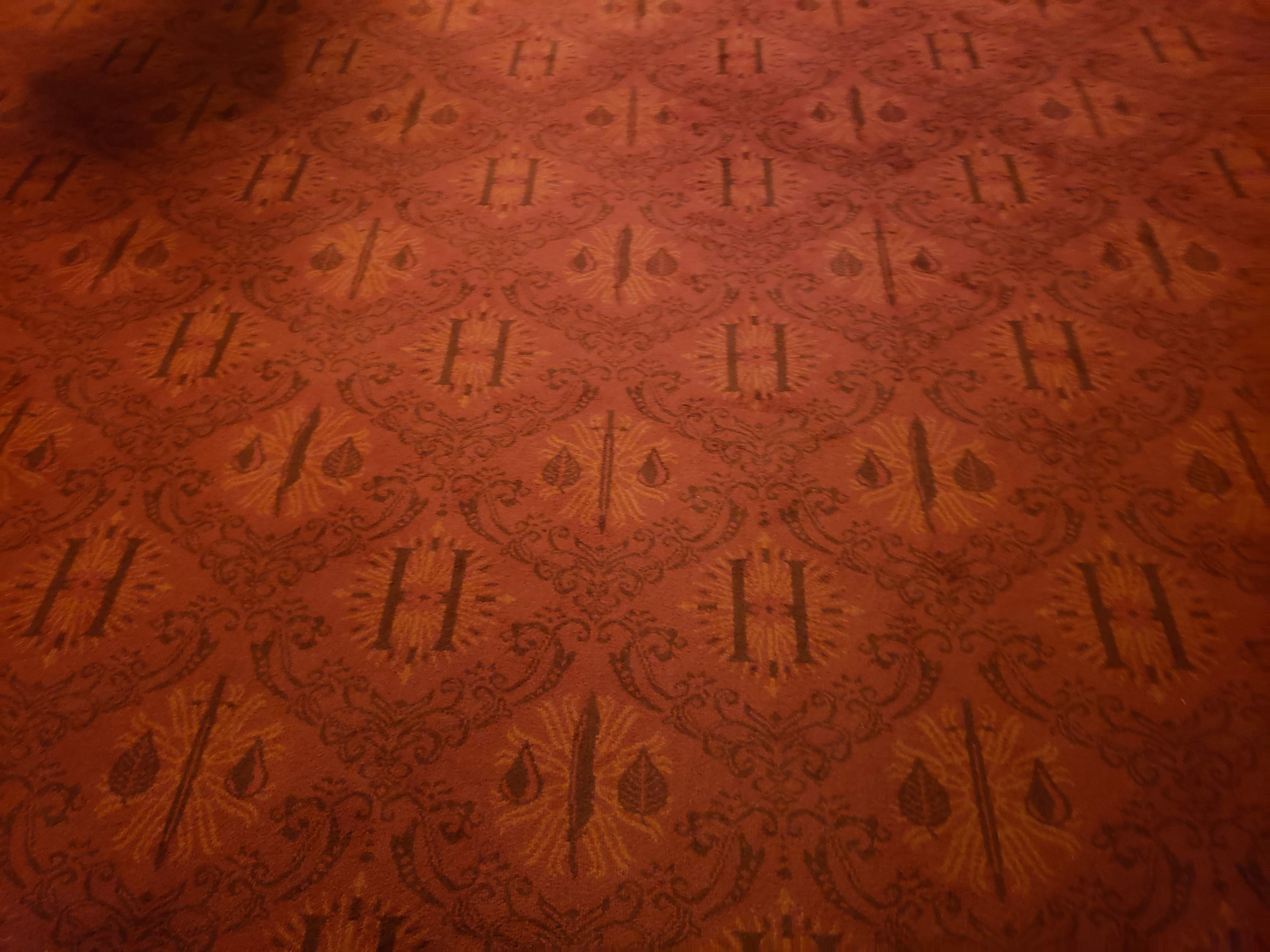

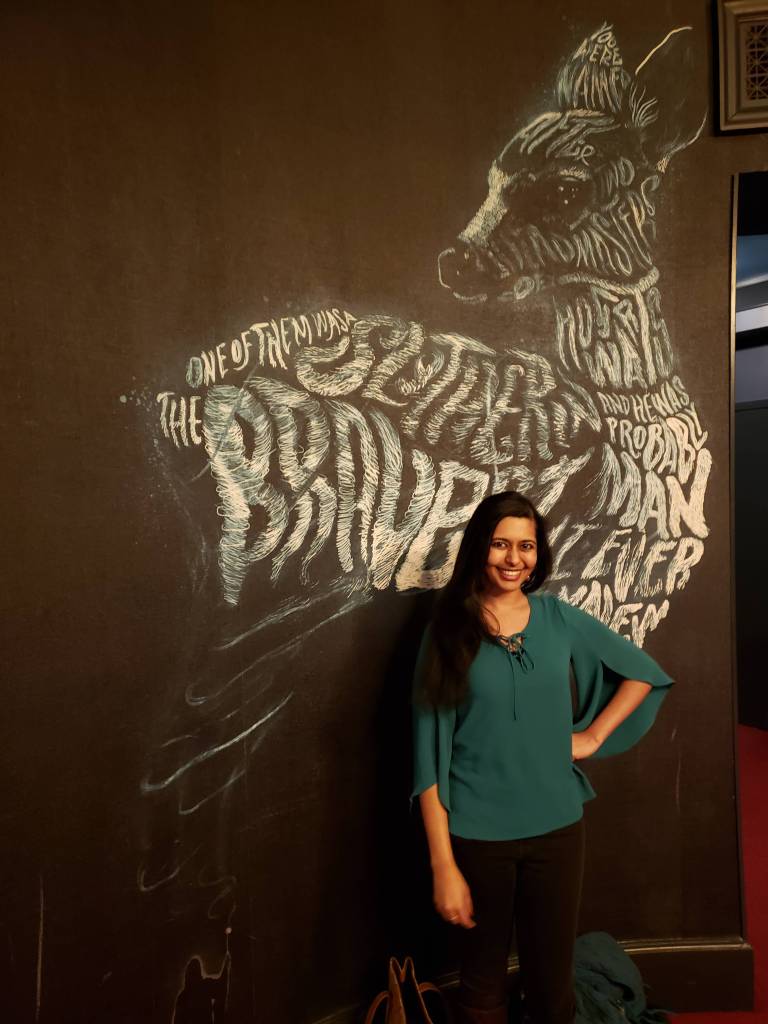
And then I entered a little round alcove of Patronus-es, silvery-white and literally born of words, powerful words from the Harry Potter universe itself. A world we love, inviting us back in with a warm embrace. It reminded me of the happy daze I felt while wandering around Hogsmeade at Universal Studios. The producers of the Cursed Child had planned out the theatre experience thoroughly. Very well then, ten points to Gryffindor. Moving on.
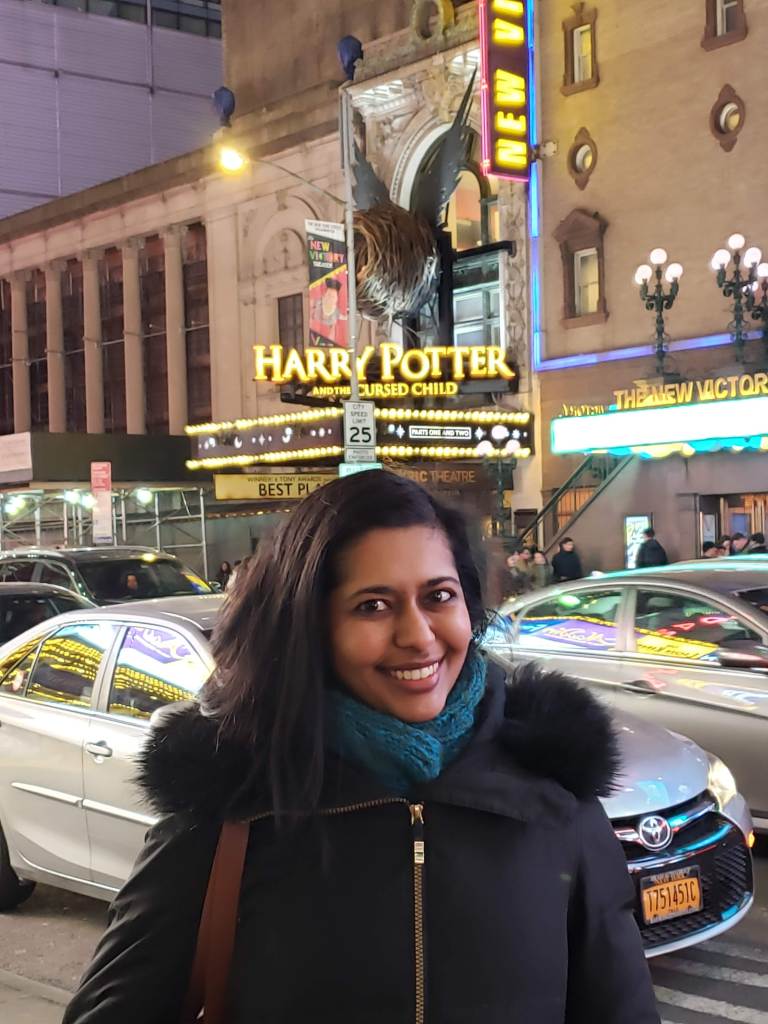
We finally wandered over to our seats in the balcony. I pored over the Playbill, as I always do, and they had a couple of helpful pages recapping the story from the seven books so far! Appreciate the effort, but if someone doesn’t know that story yet, well, what are you even doing in this theatre? Anyway, the lights went down, dimming my judgmental expression in the process, and Part I had begun. I perched at the very edge of my seat, and lost myself into a sweeping story which started nineteen years later at King’s Cross station. The actors were very talented, suitcases were rolled along and stacked and danced around with for quite effective set changes, and yes, the plot hadn’t magically morphed into a truer canon version (I was half-hoping the travesty they’d released was actually a joke script, and the actual show would be based on a completely different script. No such luck). Little Scorpius was as precious as ever, and he leaped off the pages into perfection. Albus was all misunderstood teenage angst – very reminiscent of Capslock Harry in Order of the Phoenix! The trio was as lovely as ever, albeit odd to see them as adults with jobs and children. And while the shenanigans continued, what was truly astonishing were the special effects.
At one point during Part I, we watched three characters take Polyjuice Potion, which transforms a person into someone else. This is a very familiar concept to us long-time readers. However, we’ve only watched it play out in our imaginations while reading, and by the Muggle magic of graphics and processing in the movies (I must admit, movie editing is sort of a black box for me, I have no idea how it all happens. It’s pretty magical). Well, this time I watched three people turn into three other people right in front of my eyes! They were on the stage, under the spotlight, doubling over in discomfort after consuming the potion, and voila – they changed into someone else! I was looking so hard to catch the moment when the actors switch – but it was very slick sleight-of-hand, and almost impossible to see how it all happened, except you know, because of a magical potion.
The Time Turner which I had mocked mercilessly – well, every time it was activated, there would be this extraordinary rippling effect of the stage and theatre sort of shivering and fading in and out, and what almost felt like a sonic boom – very realistic, and so much more effective at conveying what had happened. I have no words. In fact, the relevant words to explain this effect in the script are – “and there is a giant whoosh of light. A smash of noise. And time stops. And then it turns over, thinks a bit, and begins spooling backwards, slow at first . . . And then it speeds up” and I don’t think that captures it either!
Towards the end of Part I, the story ends up in an alternate timeline in which Cedric is a Death Eater, Harry’s dead and Voldemort won the war. I remember reading a fairly ridiculous account of Scorpius realizing that Harry’s death means his best friend Albus never existed, he himself is popular instead of scorned (“Scorpion King”), and the world is currently celebrating something called Voldemort Day, complete with banners. It sounded pretty comical in the script, but it was done horrifyingly well in the theatre. As Scorpius pops out of the lake, and starts realizing that something has gone very wrong, the music gets ominous and cold, and the set gets darker and darker, goosebumps erupted on my arms, while a sinister Umbridge is announcing that Harry Potter died many years ago, and there hasn’t been a Potter at Hogwarts since, suddenly eerie-looking Dementors float onto the stage. They close in around Scorpius, spooky and forbidding… and as the entire audience held their collective breath and leaned forward – suddenly a gasp went through the theatre as one of the Dementors slowly floated off the stage and into the audience. Haunted and awe-struck, I stared, while suddenly Voldemort’s banner is unfurled in the background, the familiar snake coming out of the skull, and…. end of Part I.
I sat back in shock and exhilaration, suddenly wrenched back into the real world. My heart was pounding away, my cheeks were flushed and I was breathing like I’d just run up five sets of staircases. Alright, I’m convinced. You’ve won me over, Rowling! I can see why, with such a thrilling cliffhanger ending to Part I, people come eagerly back the next day to watch ANOTHER show. I’m certainly coming back!
The next day, I was all prepped and ready to come back. I had no reservations for Part II. I was excited and jumpy all day, because I knew that a thrilling, loving world was waiting for me. The actors whose talents and skills I so admired would still be there, waiting for me. It’s a very unique feeling, to only see one half of a show, and then come back home to wait for the second half the next day. Through all my various Broadway experiences, this is not a feeling I have felt, and definitely not at this level. Occasionally, when I’m reading a book and am waiting for the sequel, it can take upto years for the next book to be released. If there is a pause in the middle of a Broadway show or movie, well, that’s usually a 15-20 minute intermission, and then you begin again. In this case it felt like an intermission, but one which spanned an entire night and a whole work day (you can imagine how much I got done that Friday). Anyway, I had no reservations left, and was all in with the excitement. I don’t have a lot of HP wearable gear (a massive gap in my wardrobe, I now realize) but I did walk into Part II wearing my House colors (Ravenclaw all the way, baby!), and topped it off with my tiny Deathly Hallows necklace.
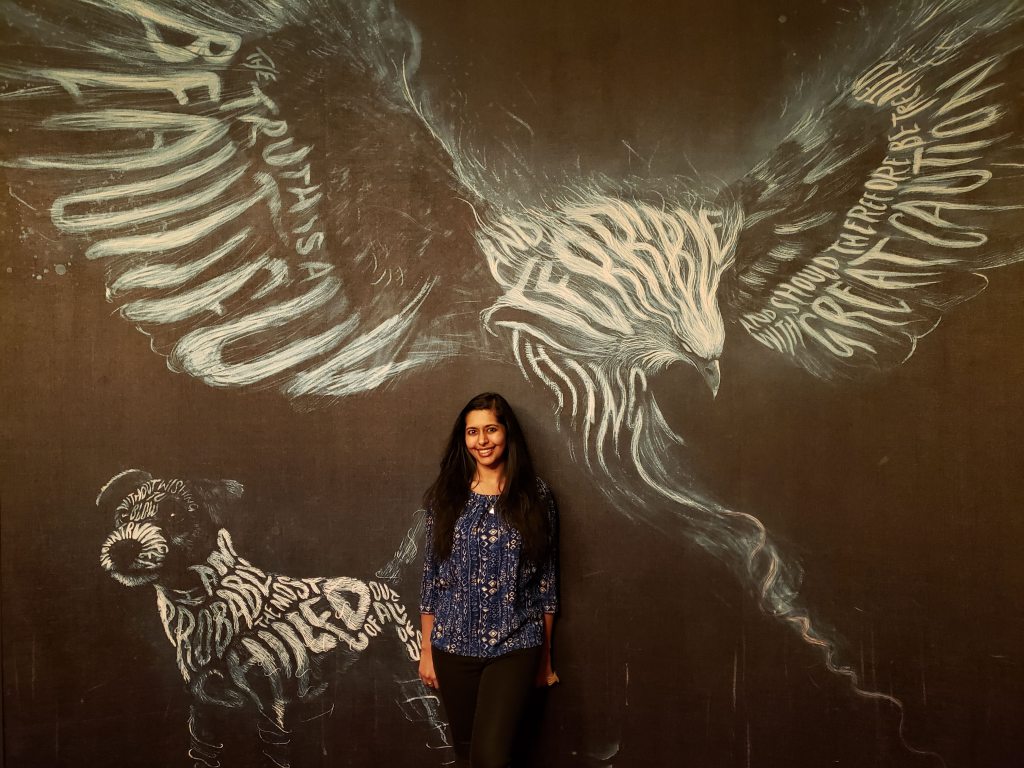
Once again, we headed over to Times Square, and queued up outside Lyric. The crowd seemed even more excited than before, and there was a thrum of anticipation as we fidgeted and bounced up and down on our toes. There was no rush to locate our seats, because everyone knew exactly where to go. This gave me extra time for some photo opportunities.
Once again, the lights dimmed and the show began. And the magic picked up right where it had left off. The characters, familiar and beloved by now, walked in and won our hearts again. The audience squealed and applauded as a surly Severus Snape turned up in an alternate timeline. We clapped as Ron and Hermione re-united once again. But the absolute best moment was a particular scene where the trio, along with Draco and Ginny, finally suspect that Delphi (the annoying progeny of Voldemort and Bellatrix) might be evil, and they get to her room to search for clues. They end up stumbling upon a prophecy written on the walls, and start reading it out loud. As for me, I was sitting there in my balcony seat, leaning over the edge to squint at the stage and the set to see if I could make out any of the words of the prophecy, when suddenly, the entire theatre LIT UP with words. On the theater walls, the ceiling, above, behind, everywhere – they had the prophecy scribbled over and over, all over the theatre. It was such a gripping, immersive experience – and I love the producers for doing that. Not just for putting up a Harry Potter-based play in a nice theatre, but using the whole space of the theatre to contain this play. To not limit it to the stage and the actors, but bring the audience into the room, into the scene, make them feel a part of the story. It was mesmerizing and magical, and it felt like they did justice to the Pottermania. To the Potter fans. To the audience full of people whose childhood was defined by this boy wizard, and this wonderful world of love and magic. I sighed with happiness, mollified at the whole Cursed Child concept, and walked out of the theater with my love restored and intact.
All was well.

 Sunlit Prism