An airplane mode for iPhones and I

As someone who’s lived away from home since the age of 17, I’ve spent a significant amount of time traveling to and from home. When I was in college, it used to be 15-hour overnight bus journeys or 20-hour train rides. Then I moved to the US about 8 years ago, and since then it’s been 20-plus hours of air travel each time I want to go home.

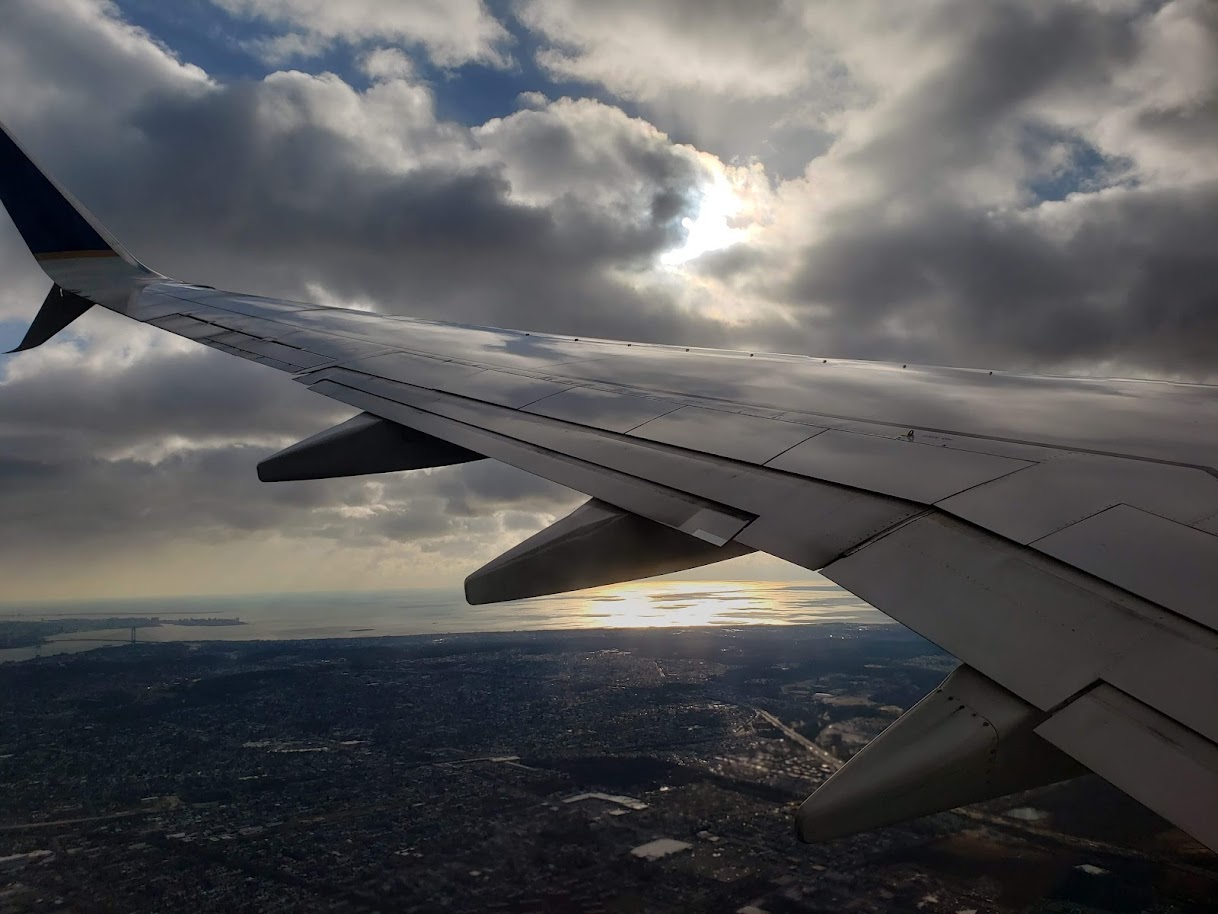
I find that whenever I’ve taken these long international flights, I don’t just put my mobile devices into airplane mode – I put myself as well. This is particularly true when I’m flying from India back to the US.

Do you know what I’m talking about? Is this a common first-generation immigrant phenomenon? Picture this: you spend months, if not years on end, thousands of miles away from your family. You get to visit home once a year, if you’re lucky – given the state of the world right now, it’s easily two to three years without seeing home. So when you finally get to make a trip home and get a few precious weeks with your people – before you know it, it’s time to leave, and you are swamped with a ton of powerful emotions. The millions of goodbyes you have to say. The sheer number of love and blessings and good wishes you carry with you. The amount of love is just overwhelming, like a cocoon surrounding you. And you never want to leave. The last few minutes at the departure terminal curb – saying goodbye to your parents, not knowing when you’ll see them next. The double-barreled swords of visa and COVID restrictions you’ll have to navigate to see your family again. Meanwhile, the other parts of your heart are tugging you the other way. Your husband of just over six months, whom you can’t really bear to be separated from. Your friends, who you see even less of, now that you have moved to a different city. Your independence, the life you painstakingly built for yourself from scratch – it all beckons. And so your heart is torn, yearning for all your loved ones to be at the same place, longing to be whole again. But that can only be done if they all collect in one room together. And given everything going on at the moment, it has been impossible to bring everyone together, not even for your wedding. And so the heart has no choice but to remain forever yearning, forever incomplete, forever aching.

And because you cannot afford to fully experience all those feelings when you’ve just reached the airport and have a 30-hour journey ahead – you turn off the signal, you go numb. You go into your airplane mode. You purposely put some distance between yourself and your emotions – and instead focus on the next step. You worry about your luggage being overweight. You sigh at the serpentine security queues. You fumble to take off your shoes and your jacket and your work laptop and your personal laptop and your kindle and your phone, and put them all in a tray without bumping into others or dropping something. You keep all your documents ready for the immigration counter. You glare at the idiots who don’t wear their masks properly; the very sight of exposed nostrils irritates you these days. You worry about reclaiming your baggage at the claim – visions of just standing at the carousel with the merry-go-round turning endlessly, delivering everyone’s bags but yours flood your brain. You hope that a freak storm doesn’t delay your flight – if it did, you’d have to rebook your connecting flights, painfully redo your PCR test, and pray to the universe that you haven’t caught the virus at some point during travel. You focus on getting through your journey with minimum hassle – because that is all that you can deal with at this point. Just trying to keep track of night and day, what time zone you’re in, what country you’re flying above – because you can’t deal with the painful emotions. If you let yourself feel them, you wouldn’t get on the plane in the first place. You’d be bawling your eyes out in the serpentine security queue, making it even harder for the agents to match your face to your already unrecognizable passport photo. You would be so sad, so broken up to be on a long unending flight, each minute taking you a mile further away from home – you couldn’t face it.

And so you activate your airplane mode when you’re flying. It’s not just for devices, you see.
In Defense of Stories Untold

But ever so often, consciously or otherwise, we curate and edit our stories – and even if we call ourselves an open book, there are certain chapters we don’t read out loud, certain stories we don’t exchange while sitting around bonfires on beaches at night – because they don’t have conventionally acceptable happy endings, or because they paint us in an unflattering light, instead of as the valiant and righteous protagonists we’d like to be.

20171119_150008.jpg

We are all storytellers. We express ourselves through Instagram pictures, overly long Facebook posts, public blogs, or even just dramatic retellings at extra long lunch breaks with our friends. We love being narrators, in varying degrees of spotlight, and there’s something incredibly gratifying to have our audience connect with our narratives.

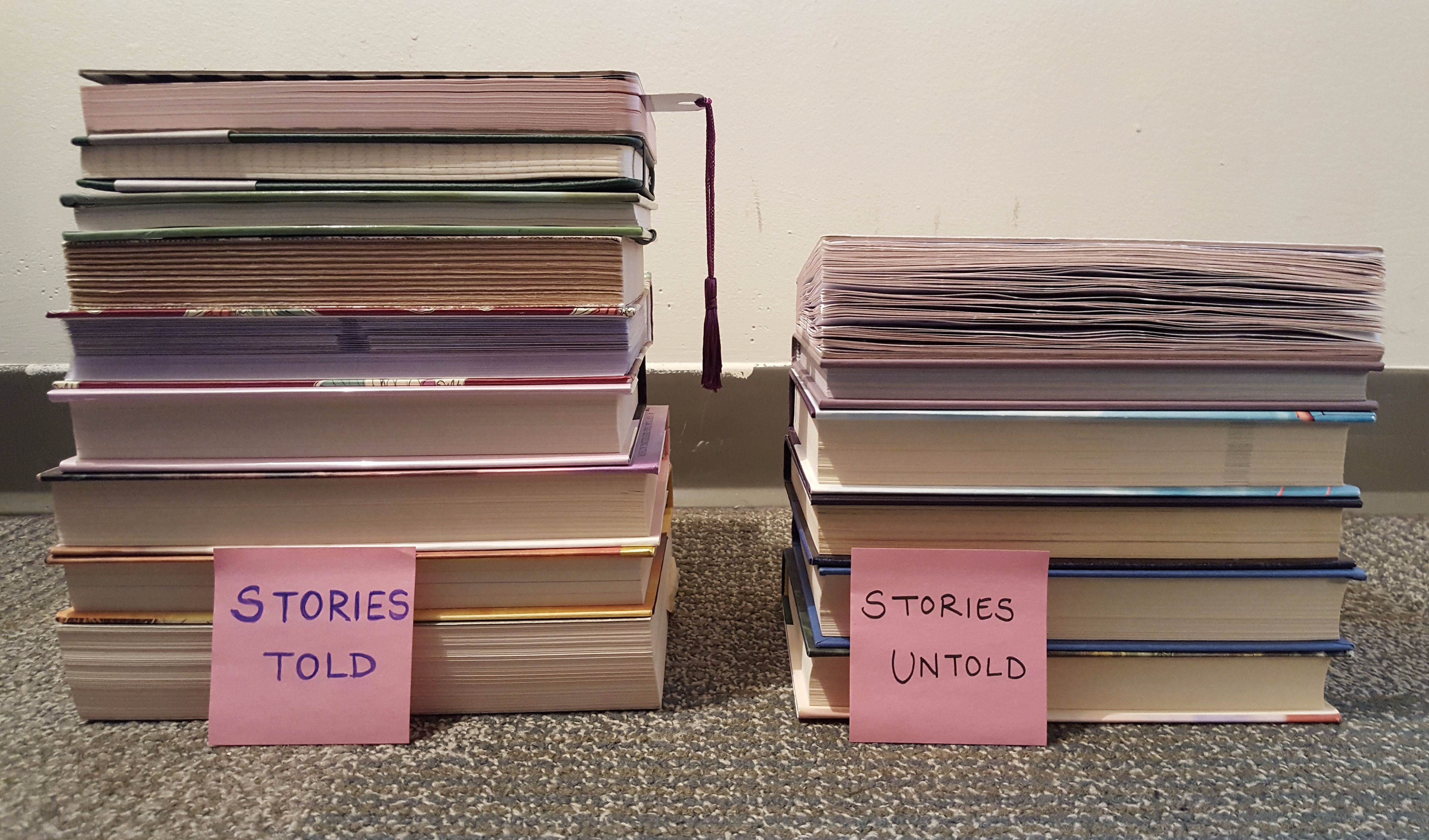
But ever so often, consciously or otherwise, we curate and edit our stories – and even if we call ourselves an open book, there are certain chapters we don’t read out loud, certain stories we don’t exchange while sitting around bonfires on beaches at night – because they don’t have conventionally acceptable happy endings, or because they paint us in an unflattering light, instead of as the valiant and righteous protagonists we’d like to be. So we bury these stories deep, never to see the light of day – and if we do decide to share them, we prefer to add filters to our photos, don masks for our one-man shows, and narrate our stories from a different angle. Maybe we’re afraid of being judged too harshly. Maybe the statute of limitations isn’t up yet. Maybe we are still in denial, and haven’t yet accepted this chapter. Maybe we look back and wonder what we were thinking in the first place, or if we were thinking at all. And so these stories, these untold stories, are kept under wraps because they spoil the overall narrative, you see? They don’t fit the image we’ve worked so hard to project. These stories are the chips in our armor, the unnecessary glimpses of flawed and painfully real humanity. It’s vulnerability laid out bare in front of the world, and we don’t want anyone to see it, because we ourselves struggle to reconcile with it. So we tell ourselves that it’s just a fluke, a one-off, and that the true narrative is still unblemished.

But don’t these stories deserve to be told? Aren’t these tales important? Don’t these chapters offer insights into self and values, knee-jerk reactions and instincts, as much as, if not more than the stories widely published? In fact, more than the stories themselves, the reasons why we choose to keep them under wraps is a deeply insightful, if difficult question, which provides a clear path towards exploring our own implicit biases and judgments. What do we feel, and why are we feeling this way? What guilt, shame, pain would we rather not deal with, and pretend doesn’t exist? While this ruminating may not change our public narrative dramatically, it does help the storyteller understand motives and reasoning of their primary protagonist – themselves.

We all love the image of ourselves we have in our heads – the perfect, flawless, whip-smart version of us who never messes up. Who never makes mistakes. Who knows exactly what to say at the right time. Who is kind and thoughtful, but also not a pushover. Who has no hair out of place, no wrinkles in their perfectly ironed clothes, no chinks in their armor. Who’s always more talented, more unstoppable, simply more than who we are in reality.

But you know what? That isn’t who you really are. You are not perfect – instead, you are real. You are real, and flawed, and just figuring out those flaws, and working on what you think warrants change makes you gloriously human. It’s hard, so very hard to remember that vulnerability is not weakness. Your messy emotions, your honest-to-goodness pain, your rawness, your awkwardness – may not be perfect, but they don’t have to be. You don’t have to be. All you have to be is your unique self, flaws and all. So let’s remove those filters. Let’s throw off those masks. Let’s read out those stories, loud and proud. Here’s to being fearless, instead of flawless!

Error: Printer Not Connected

Error messages blink left and right,

Printer not connected, printer is offline!

Paper problems of every kind:

Prints of faded colors, text too light,

Unwanted spots and horizontal lines!

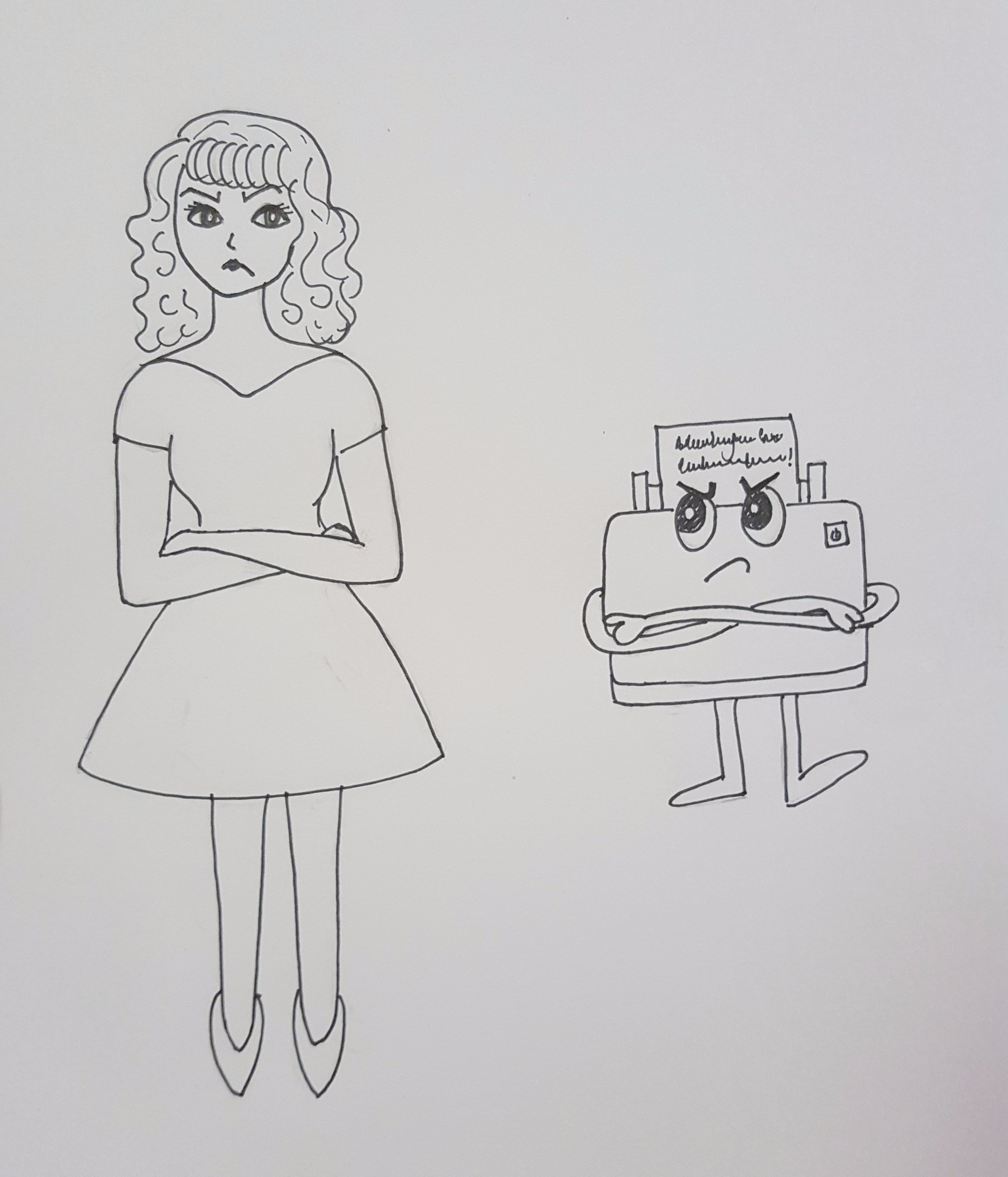
20170920_233010


Have you ever met a printer

That isn’t very temperamental?

All that it’s required to do

Is print out a copy or two!

But of course it isn’t that straightforward

Printers don’t just obey orders.


Error messages blink left and right,

Printer not connected, printer is offline!

Paper problems of every kind:

Prints of faded colors, text too light,

Unwanted spots and horizontal lines!

Then of course we have the dreaded Paper Jam:

Misfed sheets, mysteriously crooked,

Hard to remove, they’re clamped tightly in its jaws,

The printer shall not relinquish!

As for paper sizes – A4 or 3?

Who’s dealing with that? Not me!

If the paper’s fine, go check the ink,

Dried-up cartridges make me flinch.

But the most frustrating issue ever

Is even when you’re assured of ink and paper,

Print jobs neatly lined up in a queue,

No error messages whatsoever.

All looks perfect, but for some unknown reason

The printer refuses to print altogether!

You curse and you kick,

You sigh and roll your eyes,

But Mr. Inkjet here remains blithely oblivious

To all expressions of exasperation!


After all those logical fixes,

Troubleshooting manuals and forums galore,

Here is my (very scientific!) assessment:

Logic can only go so far –

The missing ingredient is human touch!

So hand out a gentle pat or two,

A loving caress, an encouraging word,

Praises, compliments, they’re all very welcome.

See, printers are just like the rest of us:

All they need is love!

So next time, instead of irritation,

Take a deep breath, be kind and patient.

Printer tantrums are best dealt

With firm and loving attention.

Don’t take it for granted,

Don’t ignore it till you need it.

Forge a bond, build a relationship.

As long as you Stay Connected

Your printer will too!