We are all storytellers. We express ourselves through Instagram pictures, overly long Facebook posts, public blogs, or even just dramatic retellings at extra long lunch breaks with our friends. We love being narrators, in varying degrees of spotlight, and there’s something incredibly gratifying to have our audience connect with our narratives.
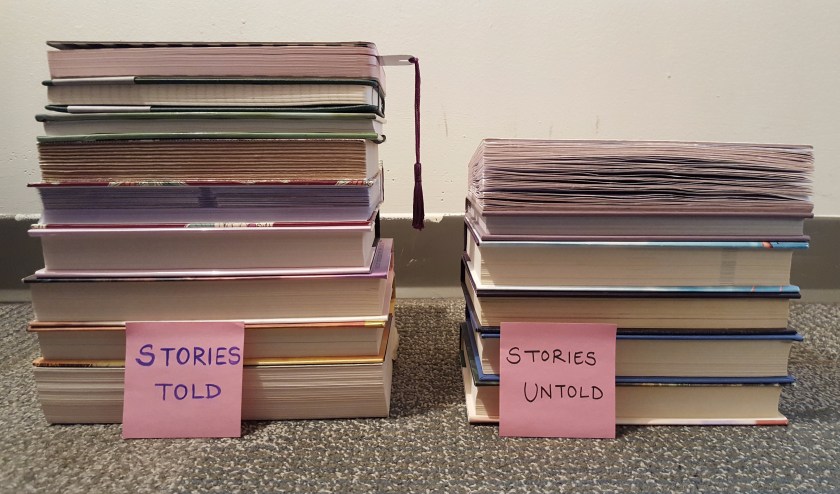
But ever so often, consciously or otherwise, we curate and edit our stories – and even if we call ourselves an open book, there are certain chapters we don’t read out loud, certain stories we don’t exchange while sitting around bonfires on beaches at night – because they don’t have conventionally acceptable happy endings, or because they paint us in an unflattering light, instead of as the valiant and righteous protagonists we’d like to be. So we bury these stories deep, never to see the light of day – and if we do decide to share them, we prefer to add filters to our photos, don masks for our one-man shows, and narrate our stories from a different angle. Maybe we’re afraid of being judged too harshly. Maybe the statute of limitations isn’t up yet. Maybe we are still in denial, and haven’t yet accepted this chapter. Maybe we look back and wonder what we were thinking in the first place, or if we were thinking at all. And so these stories, these untold stories, are kept under wraps because they spoil the overall narrative, you see? They don’t fit the image we’ve worked so hard to project. These stories are the chips in our armor, the unnecessary glimpses of flawed and painfully real humanity. It’s vulnerability laid out bare in front of the world, and we don’t want anyone to see it, because we ourselves struggle to reconcile with it. So we tell ourselves that it’s just a fluke, a one-off, and that the true narrative is still unblemished.
But don’t these stories deserve to be told? Aren’t these tales important? Don’t these chapters offer insights into self and values, knee-jerk reactions and instincts, as much as, if not more than the stories widely published? In fact, more than the stories themselves, the reasons why we choose to keep them under wraps is a deeply insightful, if difficult question, which provides a clear path towards exploring our own implicit biases and judgments. What do we feel, and why are we feeling this way? What guilt, shame, pain would we rather not deal with, and pretend doesn’t exist? While this ruminating may not change our public narrative dramatically, it does help the storyteller understand motives and reasoning of their primary protagonist – themselves.
We all love the image of ourselves we have in our heads – the perfect, flawless, whip-smart version of us who never messes up. Who never makes mistakes. Who knows exactly what to say at the right time. Who is kind and thoughtful, but also not a pushover. Who has no hair out of place, no wrinkles in their perfectly ironed clothes, no chinks in their armor. Who’s always more talented, more unstoppable, simply more than who we are in reality.
But you know what? That isn’t who you really are. You are not perfect – instead, you are real. You are real, and flawed, and just figuring out those flaws, and working on what you think warrants change makes you gloriously human. It’s hard, so very hard to remember that vulnerability is not weakness. Your messy emotions, your honest-to-goodness pain, your rawness, your awkwardness – may not be perfect, but they don’t have to be. You don’t have to be. All you have to be is your unique self, flaws and all. So let’s remove those filters. Let’s throw off those masks. Let’s read out those stories, loud and proud. Here’s to being fearless, instead of flawless!
 Sunlit Prism
That’s brave girl dear!!
Go ahead and accept ourselves!
LikeLike